Darmstadt districts in profile: Bessungen, Martinsviertel, Eberstadt and more – which neighbourhood suits you?
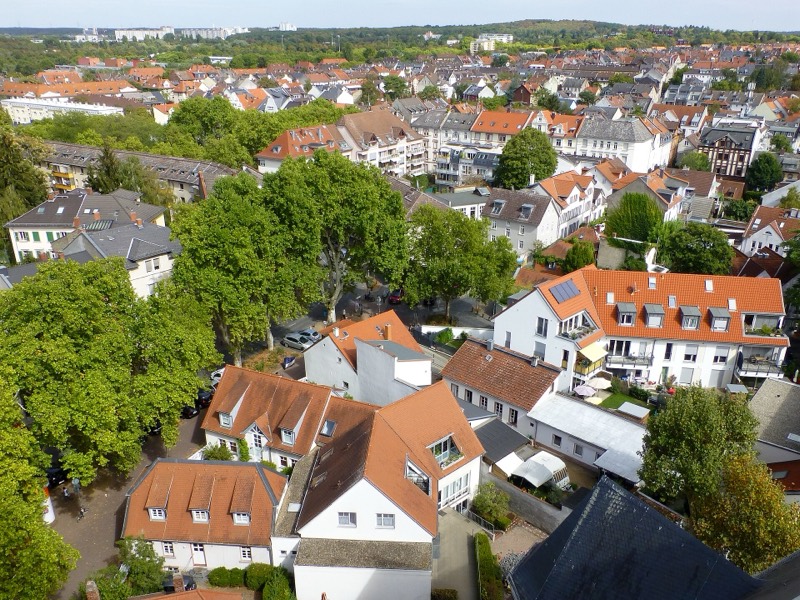
Darmstadt has nine official districts: Darmstadt-Mitte, -Nord, -Ost and -West (centre, north, east and west), plus Bessungen, Eberstadt, Arheilgen, Kranichstein and Wixhausen. Each has its own character – palace and shopping in the centre, half-timbered houses and pubs in the Martinsviertel, Art Nouveau on the Mathildenhöhe, a village core and Baroque garden in Bessungen, and on the outskirts a castle view, a bathing lake and particle research.
This guide profiles all of Darmstadt’s districts: how they feel, what you should see, who they suit and how to get there from the Orangerie tram stop. That is exactly where, in Bessungen, you will find our seven studios with kitchenette, workspace and Wi-Fi – a quiet base for exploring the city neighbourhood by neighbourhood.
All Darmstadt districts at a glance: nine neighbourhoods, nine characters
The city divides its area into nine districts, which in turn are made up of statistical sub-districts. Five form the core city – Mitte, Nord, Ost, West and Bessungen – and four lie further out: Arheilgen, Eberstadt, Kranichstein and Wixhausen. Incidentally, many names that Darmstadt locals use every day are not districts in their own right but sub-districts within them: the Martinsviertel and Johannesviertel belong to Darmstadt-Nord, the Woogsviertel to Darmstadt-Ost, and the Paulusviertel to Bessungen.
A map with the boundaries of all districts and statistical sub-districts can be found in the German Wikipedia list of Darmstadt’s districts; the addresses from this guide are listed below with route links. The short version for your planning:
- Bessungen: village core, three parks, jazz and cabaret – for anyone who wants peace in the evening and greenery in the morning.
- Mitte: palace, Luisenplatz, museums, theatre and shops – for days of culture and shopping.
- Nord: Martinsviertel, Herrngarten, Waldspirale – for night owls, students and architecture fans.
- Ost: Mathildenhöhe, Großer Woog, Rosenhöhe – for Art Nouveau fans and summer swimmers.
- West: Alnatura Campus and housing history – for the curious with a soft spot for sustainable building.
- Eberstadt: starting point for Burg Frankenstein and the Bergstraße – for hikers.
- Arheilgen: Mühlchen natural bathing lake and the Kerb fair – for families and festival-goers.
- Kranichstein: hunting lodge, hands-on museum, forest – for families with children.
- Wixhausen: village museum and the GSI research centre – for science visitors.
Darmstadt-Bessungen: the old village within the city – and home of our studios
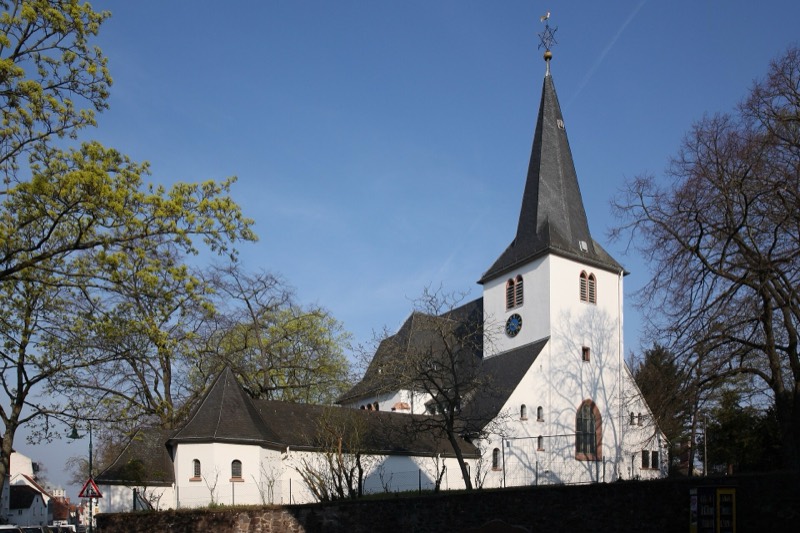
Bessungen was first mentioned in records in 1002 and remained an independent municipality until 1888 – you can still sense the village within the city today. Around the Bessunger Kirche (Bessungen church), Ludwigshöhstraße and Niederstraße run past old farmstead layouts, and a few steps further on, late-19th-century houses line Heidelberger Straße and Moosbergstraße. To the east lies the Paulusviertel, planned from 1900 by Friedrich Pützer as a villa quarter based on garden-city ideas, with the Pauluskirche (1905–1907) at its centre.
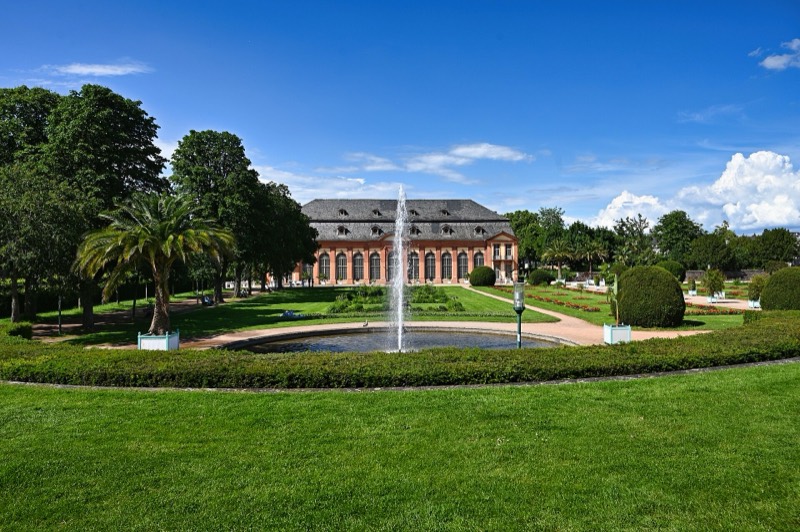
Three parks are right on the doorstep: the Baroque Orangerie garden on three levels – the Orangerie house was built from 1719 to 1721 to plans by Rémy de la Fosse –, the romantic Prinz-Emil-Garten with its little palace, and the Wolfskehl’sche Park. In the evenings, jazz and world music bands play at the Bessunger Knabenschule cultural centre, the Jazzinstitut is housed in the Baroque Kavaliershaus, and on Fridays from 14:00 to 18:00 (as of October 2026) you can shop for breakfast at the weekly market by the Orangerie.
Who is it for? Couples, families and long-stay guests who want to live centrally but away from the hustle – right here, at the Orangerie tram stop, you will find our studios. Public transport: according to the HEAG timetable, tram 3 or 7 gets you to the Schloss in 7 minutes and to Luisenplatz in 10 minutes, and tram 3 to the main station in 19 minutes. Our Bessungen guide covers the neighbourhood’s cafés, culture and festivals in detail.
Darmstadt-Mitte: palace, Luisenplatz and shopping streets
The centre is the city’s living room – and its transport hub. Around 20,000 people live here, spread across sub-districts such as Stadtzentrum, Kapellplatzviertel and Hochschulviertel; the TU’s city-centre campus and the darmstadtium congress centre are also part of it. On Luisenplatz, the “Lange Ludwig” (Long Ludwig) rises 39 metres high: the Ludwig Monument, built from 1841 to 1844 to a design by Georg Moller. The tram lines cross all around it, and according to Darmstadt Tourismus more than 400 shops await in the city centre, from department stores to boutiques on Wilhelminenstraße and Schulstraße.
A few steps further on stands the Residenzschloss (former royal residence): the Schlossmuseum is open Friday to Sunday from 10:00 to 17:00, and you can see the period rooms on a guided tour (as of October 2026). On the Marktplatz in front of it, market stalls are set up on Wednesdays, Fridays and Saturdays from 08:00 to 14:00 (as of October 2026). The Hessisches Landesmuseum (Hessian State Museum), in Alfred Messel’s building opened in 1906, is open until 20:00 on Wednesdays (as of October 2026), and in the evening the Staatstheater and the Centralstation, a former power station from 1888, draw you in with concerts.
Who is it for? Culture fans, shopping days and rainy weather. Public transport: tram 3 from the Orangerie to “Schloss” in 7 minutes, tram 3 or 7 to “Luisenplatz” in 10 minutes (according to the HEAG timetable).
Darmstadt-Nord: Martinsviertel, Johannesviertel and Waldspirale
Darmstadt-Nord is home to several neighbourhoods with their own names and character. The Martinsviertel was once a farming settlement outside the city wall, where pigs ran across the street – hence its nickname “Watzeviertel” (from the local dialect word for pig). In the 1960s a citizens’ initiative saved the half-timbered houses from demolition, and today the neighbourhood is considered a sought-after residential area close to the university and the Herrngarten. Around Riegerplatz, Heinheimer Straße and Liebfrauenstraße you will find a string of bars, restaurants and small shops, and on Wednesdays from 08:00 to 13:00 Riegerplatz smells of market vegetables and baked goods (as of October 2026); in the “Kneipenviereck” (pub quarter), according to TU Darmstadt, you pass more than ten pubs and cafés within ten minutes. In September the neighbourhood celebrates the Martinskerb fair with a music night in the pubs. Our nightlife guide rounds up bars, clubs and live music.
The Johannesviertel is quieter: from 1872 a late-19th-century quarter grew up here with front gardens and neoclassical and brick façades. At its centre stands the neo-Gothic Johanneskirche (1892–1894), and on Johannesplatz in front of it there is an open-air cinema and, on Thursdays from 13:30 to 18:30, a weekly market (as of October 2026).
The Herrngarten is Darmstadt’s oldest and largest park, public since 1801, with wide lawns, playgrounds and the city’s biggest fountain; next door lies the Rococo Prinz-Georg-Garten. Further north, Friedensreich Hundertwasser’s Waldspirale spirals upwards: 105 flats, 1,048 windows, no two alike, and a planted roof that, according to the Bauverein housing company, rises from two to eleven storeys. In May 2026 the city added it to its list of listed monuments; as it is lived in, you admire it from the outside. Beyond it begins the roughly 100-hectare Bürgerpark Nord with a bike and skate park.
In the south-west of the district are the main station and the Kunsthalle on Steubenplatz, which shows contemporary art Wednesday to Sunday from 11:00 to 17:00 (as of October 2026) – until 10 January 2027, for example, Hilarius Hofstede’s “Courant Van Gogh”. Further west still, the Waldkolonie was built in 1911/12 as a railway workers’ settlement; today it is also home to ESA’s ESOC space operations centre.
Who is it for? Students, night owls and architecture fans. Public transport: tram 3 from the Orangerie to “Schloss” (7 min) and on foot to the Martinsviertel, to “Willy-Brandt-Platz” by the Herrngarten (12 min) or to “Kasinostraße” by the Johannesviertel (14 min); tram 7 to “Rhein-/Neckarstraße” near the Kunsthalle (12 min), all according to the HEAG timetable. For the Waldspirale, change at Luisenplatz to tram 4 or 5.
Darmstadt-Ost: Mathildenhöhe, Woogsviertel and Rosenhöhe
In the east, Darmstadt becomes a stage for Art Nouveau. The Mathildenhöhe has been a UNESCO World Heritage Site since 2021: an artists’ colony was founded here in 1899, and its exhibitions from 1901 to 1914 turned an entire quarter into an experiment. Its landmark is Joseph Maria Olbrich’s Hochzeitsturm (Wedding Tower, 1908) with its “five-finger” crown: 209 steps, the wind blowing at the top, and the city at your feet. Until 31 January 2027 the exhibition building is showing the anniversary exhibition “A Step Ahead – 125 Years of Mathildenhöhe”. Our Art Nouveau guide brings together opening times and tips.
To the south lies the Woogsviertel, a late-19th-century quarter that was rebuilt in post-war modernist style after the destruction of the Second World War. The Jugendstilbad (Art Nouveau baths) and the TU’s botanical garden are here too, but its heart is the Großer Woog, a bathing lake in the middle of the city: probably created in the 16th century as a firefighting pond, first mentioned as a public bathing pond around 1820, with a 10-metre diving tower. According to Bäder Darmstadt, the next bathing season runs from 16 May to 12 September 2027. Further east, more than 10,000 roses bloom from May to November in the rose garden of the Rosenhöhe, and with the Zoo Vivarium and the organic farm Hofgut Oberfeld the east becomes a family day out. At the edge of the district, the wide expanse of the Lichtwiese opens up.
Who is it for? Architecture and design fans, families and summer swimmers. Public transport: tram 3 from the Orangerie to “Schloss” (7 min according to the HEAG timetable), then bus F or FM to “Lucasweg/Hochzeitsturm”.
Darmstadt-West: Alnatura Campus, settlers’ houses and university
Darmstadt-West tells a great deal of everyday and economic history – and has an unusual place to visit. The Alnatura Campus was built on a former barracks site. According to Darmstadt Tourismus, its centrepiece is Europe’s largest office building with exterior walls made of clay; on the 55,000-square-metre grounds, a discovery trail shows how military land is turning back into landscape. The campus is freely accessible Monday to Friday from 07:00 to 19:00 (as of October 2026), and at lunchtime the vegetarian organic restaurant “Vegi” cooks there.
Next door, the Heimstättensiedlung tells a story from times of crisis: from 1932, unemployed people built their own houses here through self-help, and in 1932 and 1933 53 semi-detached houses were built for 106 families. In the Verlegerviertel (publishers’ quarter) on the old parade ground, publishers and businesses settled after the war, the Darmstädter Echo newspaper moved here in 1950, and since the 1960s today’s Hochschule Darmstadt (University of Applied Sciences) has taught here in its striking high-rise.
Who is it for? Visitors to the Hochschule and anyone interested in sustainable building. Public transport: tram 3 from the Orangerie to the main station (19 min according to the HEAG timetable), then, according to Alnatura, bus K to “Mahatma-Gandhi-Straße” in 12 minutes.
Darmstadt-Eberstadt: gateway to Burg Frankenstein and the Bergstraße
Eberstadt – “Ewwerscht” in the local dialect – is older than Bessungen: the first record dates from 1 September 782, and the town has been part of Darmstadt since 1937. It lies where the Bergstraße crosses the Modau stream coming down from the Odenwald, and the Dreifaltigkeitskirche (Holy Trinity church) stands on a sand dune. For over 400 years Eberstadt belonged to the lords of Frankenstein, whose Burg Frankenstein (Frankenstein Castle, first mentioned in 1252) towers above the town on a 370-metre spur of the Odenwald. From the castle tower you look out over the Rhine plain; admission is free, but there may be closures due to building work – please check before you go.
In summer, the Mühltalbad beckons, an outdoor pool with a view of the Frankenstein, which according to Bäder Darmstadt opens from 16 May to 12 September 2027; renovation is under way, and the diving tower will follow in 2027. Hikers set off from the Eberstadt Friedhof stop on the first stage of the Burgensteig castle trail – you will find tours in our hiking guide. On Saturdays from 07:30 to 12:30, producers at the Eberstadt farmers’ market sell vegetables, honey and lamb from the traditional orchards (as of October 2026), and in August the district celebrates its “Ewwerschter Kerb” fair.
Who is it for? Hikers, cyclists and families in summer. Public transport: tram 7 runs from the Orangerie to Eberstadt without changing – according to the HEAG timetable, 27 minutes to “Wartehalle” and 32 minutes to the terminus “Frankenstein” (Mon–Fri every 20 minutes). Exception: during the autumn school holidays from 5 to 18 October 2026, line 7 is suspended according to HEAG mobilo; tram 1 then runs from the main station to Eberstadt.
Darmstadt-Arheilgen: Mühlchen bathing lake, Kerb and village life
Arheilgen lies between the Hessian Ried plain and the Messel hills and, like Eberstadt, has been part of Darmstadt since 1937. A rent register probably names the place “Araheiligon” around the year 1000. People here love a celebration: for the Oarhelljer Kerb (Arheilgen’s traditional fair), the Kerbverein invites you to the “Zum Goldnen Löwen” community centre from 29 October to 3 November 2026, and in September there is the Muckerfest.
The best-known attraction is the Arheilger Mühlchen, a natural bathing lake on the Ruthsenbach stream, a public bathing spot since 1924, with historic changing cabins, a kiosk and a water-lily pond where herons stand. It is only open in summer; according to Bäder Darmstadt, the 2027 season starts on 16 May.
Who is it for? Families in summer and fans of genuine neighbourhood festivals. Public transport: tram 3 or 7 to Luisenplatz (10 min according to the HEAG timetable), then change to tram 6 or 8 towards Arheilgen (according to the HEAG network map); Arheilgen station is on the S6 suburban line.
Darmstadt-Kranichstein: hunting lodge, bioversum and Oberwald forest
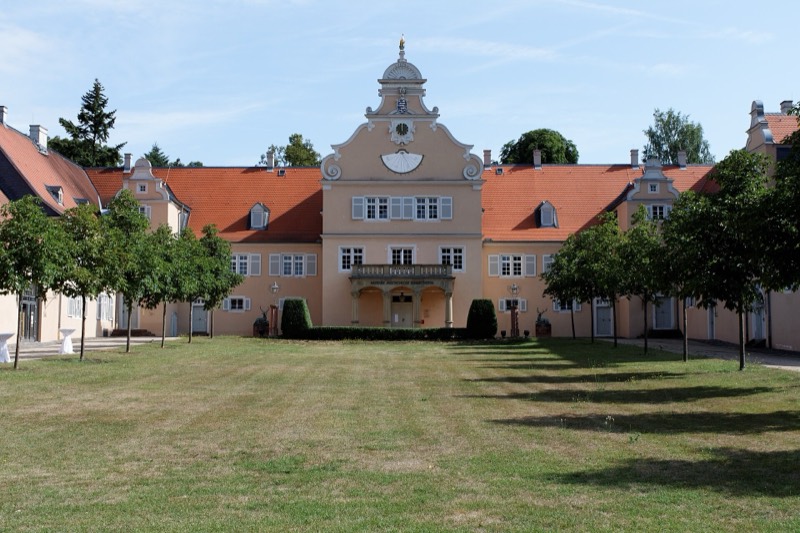
Kranichstein has two faces. From 1968, “Neu-Kranichstein” with its high-rises was built to designs by Ernst May; today bungalows, terraced houses and passive house estates also shape the picture – according to Wikipedia, Germany’s first certified passive house was built here in 1991. The other face is older and greener: on the edge of the Oberwald forest lies the Jagdschloss Kranichstein (Kranichstein hunting lodge). Landgrave Georg I acquired the estate in 1572, and in the 18th century it became the landgraves’ hunting residence. The museum displays hunting weapons and trophies, offers costumed tours and is open on Fridays from 13:00 to 17:00 and on Saturdays, Sundays and public holidays from 10:00 to 17:00 (as of October 2026). A comprehensive renovation is planned from 2027 – a good reason to go now.
Right next door, the bioversum in the former armoury presents biodiversity you can touch, Tuesday to Friday 11:00–17:00, Saturday and Sunday 10:00–17:00 (as of October 2026). Then it is off into the forest: at the Steinbrücker Teich pond with the Oberwaldhaus, a café-restaurant since 1901, you can go boating and play mini golf. Railway fans will find over 200 vehicles and steam train rides at the Eisenbahnmuseum Darmstadt-Kranichstein (railway museum) from April to September.
Who is it for? Families with children, nature and technology fans. Public transport: tram 3 or 7 to Luisenplatz, then tram 4 or 5 to Kranichstein (according to the HEAG network map). For the hunting lodge, the operator recommends the “Siemensstraße” stop (then 15–20 minutes on foot) or bus H to “Kesselhutweg” (10–15 minutes on foot).
Darmstadt-Wixhausen: village museum, oldest church tower and particle research
In the far north lies Wixhausen, first mentioned in 1172 as “Wickenhusen” – “settlement by the pond”. It only became part of Darmstadt in 1977 and is still the city’s only local district with its own local council. According to Wikipedia, the Romanesque tower of the Protestant church, dating from 1150, is the oldest surviving building in Darmstadt; since 1997 the Baroque church has had “physics windows” by Thomas Duttenhoefer. The Wixhäuser Dorfmuseum (village museum) opens from April to early October, usually on the first Sunday of the month – the 2026 season is over. In the forest, the roughly 800-metre Fabienne-Steig trail explains the aftermath of a 2018 storm.
On the eastern edge, the GSI Helmholtzzentrum für Schwerionenforschung (GSI Helmholtz Centre for Heavy Ion Research) carries out research: according to Darmstadt Tourismus, six new chemical elements were discovered here, including element 110, “darmstadtium”. Next door, the FAIR accelerator facility is being built, with a ring accelerator 1,100 metres in circumference. You can also book free guided tours individually online; they take place with ten or more participants, and children aged twelve and over may join (as of October 2026).
Who is it for? Research and conference visitors, and anyone who loves village idylls. Public transport: tram 3 to the main station (19 min according to the HEAG timetable), then, according to GSI, the S-Bahn (suburban train) two stops to Wixhausen and, Monday to Friday, bus G on to GSI.
Where to stay in Darmstadt? Which district suits you best
That depends on what you have in mind. If you want to go pub-hopping at night, you will like staying near the Martinsviertel; if you are going to a museum every day, the centre. For most guests, a lot speaks for Bessungen: quiet residential streets, parks on the doorstep, jazz and cabaret in the neighbourhood – and yet tram 3 or 7 gets you to Luisenplatz in 10 minutes, tram 7 to Eberstadt without changing, and tram 3 to the main station in 19 minutes, from where S-Bahn trains and buses run to the north.
Right here, at the Orangerie tram stop, we rent out seven studios for up to two people. Each has its own bathroom, a kitchenette for your shopping from the Friday market, a workspace with Wi-Fi and self check-in – suited to a short break from two nights just as much as to your first weeks as a newcomer to Darmstadt, when you can explore the neighbourhoods from here as part of your flat hunt. Find out how it works on our page on long stays in Darmstadt; Studio 1 gives you a first impression.
Addresses & opening hours
Bessunger Kirche
Heart of the old village of Bessungen: bell from 1435, Art Nouveau font from 1908/09; please check opening times before your visit.
- Am Kapellberg 2, 64285 Darmstadt
- approx. 3 min walk · 0.2 km from the studios (straight line)
Orangeriegarten Bessungen
Baroque garden on three levels with avenues and fountains; the Orangerie house was built 1719–1721 to plans by Rémy de la Fosse.
- Bessunger Straße 44, 64285 Darmstadt
- approx. 5 min walk · 0.3 km from the studios (straight line)
- “Orangerie” stop (trams 3 and 7)
Paulusplatz & Pauluskirche (Paulusviertel)
Centre of Friedrich Pützer’s villa quarter; church from 1905–1907.
- Niebergallweg 20, 64285 Darmstadt
- approx. 12 min walk · 0.8 km from the studios (straight line)
Luisenplatz & Ludwigsmonument
Central square with the 39-metre “Lange Ludwig” and the interchange for all tram lines.
- Luisenplatz, 64283 Darmstadt
- approx. 25 min walk · 1.5 km from the studios (straight line)
- Tram 3 or 7 from “Orangerie” to “Luisenplatz” (10 min according to the HEAG timetable)
Residenzschloss & Schlossmuseum
Palace in the heart of the city, with the weekly market in front (Wed, Fri, Sat 08:00–14:00).
- Residenzschloss 1, 64283 Darmstadt
- Schlossmuseum Fri–Sun 10:00–17:00, period rooms by guided tour only (as of October 2026)
- approx. 26 min walk · 1.6 km from the studios (straight line)
- Tram 3 from “Orangerie” to “Schloss” (7 min according to the HEAG timetable)
Riegerplatz (Martinsviertel)
Centre of the “Watzeviertel” with half-timbered houses, bars and small shops.
- Riegerplatz, 64289 Darmstadt
- approx. 40 min walk · 2.5 km from the studios (straight line)
- Tram 3 from “Orangerie” to “Schloss” (7 min according to the HEAG timetable), then on foot
Johanneskirche & Johannesplatz
Neo-Gothic church (1892–1894) in the late-19th-century Johannesviertel; markets and open-air cinema on the square.
- Johannesplatz 1, 64293 Darmstadt
- approx. 35 min walk · 2.2 km from the studios (straight line)
- Tram 3 from “Orangerie” to “Kasinostraße” (14 min according to the HEAG timetable), then on foot
Herrngarten
The city’s oldest and largest park, public since 1801, with lawns and Darmstadt’s biggest fountain.
- Herrngarten, 64283 Darmstadt (hinter dem Hessischen Landesmuseum)
- approx. 33 min walk · 2.0 km from the studios (straight line)
- Tram 3 from “Orangerie” to “Willy-Brandt-Platz” (12 min according to the HEAG timetable)
Waldspirale
Hundertwasser residential complex with 105 flats and 1,048 windows, on the city’s list of monuments since 2026; residential, view from outside only.
- Waldspirale / Am Ziegelbusch, 64289 Darmstadt
- 2.9 km from the studios (straight line)
- Tram 3 or 7 to “Luisenplatz”, then tram 4 or 5 to “Waldspirale”
Kunsthalle Darmstadt
Contemporary art on Steubenplatz; Hilarius Hofstede’s “Courant Van Gogh” until 10 January 2027.
- Steubenplatz 1, 64293 Darmstadt
- Wed–Sun 11:00–17:00 during exhibitions (as of October 2026)
- approx. 26 min walk · 1.6 km from the studios (straight line)
- Tram 7 from “Orangerie” to “Rhein-/Neckarstraße” (12 min according to the HEAG timetable)
Mathildenhöhe & Hochzeitsturm
UNESCO World Heritage Site since 2021; anniversary exhibition “A Step Ahead” until 31 January 2027.
- Olbrichweg, 64287 Darmstadt
- Hochzeitsturm in October Sun–Thu 10:00–18:00, Fri–Sat 10:00–19:00, November–February daily 11:00–17:00 (as of October 2026)
- approx. 37 min walk · 2.3 km from the studios (straight line)
- Tram 3 from “Orangerie” to “Schloss” (7 min according to the HEAG timetable), then bus F or FM to “Lucasweg/Hochzeitsturm”
Großer Woog – Naturfreibad
Bathing lake in the middle of the Woogsviertel, first mentioned as a public bathing pond around 1820, with a 10-metre diving tower.
- Landgraf-Georg-Straße 121, 64287 Darmstadt
- Bathing season 16 May – 12 September 2027 according to Bäder Darmstadt (as of October 2026)
- approx. 32 min walk · 1.9 km from the studios (straight line)
Alnatura Campus
Former barracks site with an office building with clay façades and a discovery trail.
- Mahatma-Gandhi-Straße 7, 64295 Darmstadt
- Grounds Mon–Fri 07:00–19:00 according to Darmstadt Tourismus (as of October 2026)
- approx. 32 min walk · 2.0 km from the studios (straight line)
- Tram 3 from “Orangerie” to the main station (19 min according to the HEAG timetable), then bus K to “Mahatma-Gandhi-Straße” (12 min according to Alnatura)
Burg Frankenstein
Castle ruin above Eberstadt with a tower you can climb; free admission, please check access before your visit due to building work.
- Burg Frankenstein, 64367 Mühltal (Nieder-Beerbach)
- 7.4 km from the studios (straight line)
Eberstädter Mühltalbad
Outdoor pool with a view of the Frankenstein; renovation under way, diving tower not until 2027.
- Mühltalstraße 72–80, 64297 Darmstadt
- Season 16 May – 12 September 2027 according to Bäder Darmstadt (as of October 2026)
- 4.3 km from the studios (straight line)
- According to Bäder Darmstadt, bus NE and K 50 to “Schwimmbad”
Arheilger Mühlchen
Natural bathing lake on the Ruthsenbach, a public bathing spot since 1924; open in summer only.
- Brücherweg 1, 64291 Darmstadt
- 2027 season from 16 May according to Bäder Darmstadt (as of October 2026)
- 5.1 km from the studios (straight line)
Jagdschloss Kranichstein
Landgraves’ estate from 1572, later a hunting residence – today a museum with costumed tours; renovation planned from 2027.
- Kranichsteiner Straße 261, 64289 Darmstadt
- Fri 13:00–17:00, Sat, Sun and public holidays 10:00–17:00 (as of October 2026)
- 5.6 km from the studios (straight line)
- According to the operator, tram 4/5 to “Siemensstraße” (then 15–20 min on foot) or bus H to “Kesselhutweg” (10–15 min on foot)
bioversum Jagdschloss Kranichstein
Hands-on exhibition on biodiversity in the former armoury – ideal with children.
- Kranichsteiner Straße 253, 64289 Darmstadt
- Tue–Fri 11:00–17:00, Sat–Sun 10:00–17:00 (as of October 2026)
- 5.3 km from the studios (straight line)
Wixhäuser Dorfmuseum
Village history in the northernmost district.
- Römergasse 17, 64291 Darmstadt
- April to early October, usually on the 1st Sunday of the month 14:30–16:00; 2026 season over (as of October 2026)
- 8.3 km from the studios (straight line)
GSI Helmholtzzentrum für Schwerionenforschung
Element 110, darmstadtium, among others, was discovered here; FAIR is being built next door.
- Planckstraße 1, 64291 Darmstadt
- Free guided tours after online booking, with 10 or more participants, children aged 12 and over (as of October 2026)
- 8.3 km from the studios (straight line)
- According to GSI, S-Bahn from the main station to Wixhausen, then bus G (Mon–Fri)
Distances from the studios (Jahnstraße 1, Darmstadt-Bessungen) as the crow flies, walking times estimated. Opening hours without guarantee – please check the venue website before visiting.
Our tips
- During the autumn school holidays from 5 to 18 October 2026 there is building work across the city, according to HEAG mobilo: tram lines 4, 5 and 7 are suspended, while lines 1, 2, 6, 8 and 9 and buses such as F/FM, G, H and K run with diversions or on shortened routes. Replacement buses run from Luisenplatz to Arheilgen (8E) and Kranichstein (4E), and tram 1 runs from the main station to Eberstadt. Tram 3 from the Orangerie is not on the list of affected lines – but check your connection in the HEAG or RMV journey planner beforehand anyway.
- The Darmstadt Card costs 10 € as a day ticket and 15 € as a 2-day ticket (as of October 2026); it is valid as an RMV ticket on buses and trains in Darmstadt’s fare zone 4000 and gives discounts, for example at the Schlossmuseum and the Jagdschloss Kranichstein.
- Autumn tip: from 29 October to 3 November 2026, Arheilgen celebrates the Oarhelljer Kerb at the “Zum Goldnen Löwen” community centre.
- The Jagdschloss Kranichstein and the bioversum combine well: at weekends both open at 10:00; the hunting lodge is closed Monday to Thursday.
- By car: on 19 October 2026 the new BE3 parking zone (Bessungen-Süd) starts in the south of Bessungen – paid parking Monday to Saturday 06:00–21:00, maximum four hours (according to the City of Darmstadt). Exploring the districts by tram and bus is more relaxed.
FAQ
What districts does Darmstadt have?
Which district does the Martinsviertel belong to?
Which districts in Darmstadt are particularly popular?
Where is the best place to stay in Darmstadt?
How do I get to the outlying districts without a car?
Is there a map of Darmstadt’s districts?
Sources & further reading: Wikipedia: Liste der Stadtteile von Darmstadt (neun Stadtteile, statistische Bezirke) · Wikipedia: Darmstadt-Mitte · Wikipedia: Darmstadt-Nord (Johannesviertel, Martinsviertel, Waldkolonie, Mornewegviertel, Am Ziegelbusch) · Wikipedia: Darmstadt-Ost (Mathildenhöhe, Woogsviertel, Oberfeld) · Wikipedia: Darmstadt-West · Wikipedia: Darmstadt-Bessungen (1002, Gemeinde bis 1888, Dorfkern, Paulusviertel) · Wikipedia: Bessunger Kirche · Wikipedia: Paulusviertel (Darmstadt) · Stadt Darmstadt: Die großen 5 – Parks und Gärten (Orangerie 1719–1721, Herrngarten, Rosenhöhe) · Stadt Darmstadt: Weitere Grünanlagen (Wolfskehl’scher Park, Bürgerpark Nord) · Darmstadt Tourismus: Jazzinstitut Darmstadt · Kulturzentrum Bessunger Knabenschule: Programm · Darmstadt Tourismus: Wochenmärkte (Marktplatz, Bessungen, Riegerplatz, Johannesplatz, Bauernmarkt Eberstadt) · Darmstadt Tourismus: Kirchweih-Veranstaltungen (Bessunger, Martins-, Ewwerschter Kerb) · HEAG mobilo: Fahrplan Linie 3 (gültig ab 14.12.2025) · HEAG mobilo: Fahrplan Linie 7 (gültig ab 14.12.2025) · HEAG mobilo: Liniennetzplan Straßenbahn 2026 · HEAG mobilo: Bauarbeiten im Stadtgebiet in den Herbstferien 5.–18.10.2026 · Wikipedia: Ludwigsmonument · Darmstadt Tourismus: Shopping in Darmstadt (mehr als 400 Geschäfte) · Schlossmuseum Darmstadt: Öffnungszeiten und Preise · Darmstadt Tourismus: Hessisches Landesmuseum Darmstadt · Darmstadt Tourismus: Centralstation (Elektrizitätswerk 1888) · Wikipedia: Darmstadt-Martinsviertel (Watzeviertel, Bürgerinitiative, Lokale) · TU Darmstadt: Nachtleben in Darmstadt (Kneipenviereck Martinsviertel) · Bezirksverein Martinsviertel: Martinskerb · Wikipedia: Darmstadt-Johannesviertel (Johanneskirche, Johannesplatz) · bauverein AG: Waldspirale 1–8 · Stadt Darmstadt: Drei neue Denkmäler (Waldspirale, 01.06.2026) · Kunsthalle Darmstadt: Besuch (Öffnungszeiten) · Kunsthalle Darmstadt: Aktuelle Ausstellungen · Wikipedia: Darmstadt-Waldkolonie · UNESCO-Kommission: Mathildenhöhe Darmstadt · Mathildenhöhe: Welterbe Mathildenhöhe (Künstlerkolonie, Ausstellungen 1901–1914) · Mathildenhöhe: Hochzeitsturm (209 Stufen) · Hochzeitsturm Darmstadt: Öffnungszeiten · Mathildenhöhe: Ausstellung „A Step Ahead – 125 Jahre Mathildenhöhe“ · Mathildenhöhe: Allgemeine Informationen (Anfahrt Bus F/FM) · Wikipedia: Woogsviertel · Bäder Darmstadt: Naturfreibad Großer Woog · Bäder Darmstadt: Öffnungszeiten Saison 2027 · Zoo Vivarium Darmstadt: Besucherinfo · Darmstadt Tourismus: Hofgut Oberfeld · Darmstadt Tourismus: Alnatura Campus (Lehmfassade, Öffnungszeiten) · Alnatura: Alnatura Campus · Alnatura: Anfahrt zum Alnatura Campus (Bus K ab Hauptbahnhof) · Tress Brüder: Vegi Bio-Restaurant auf dem Alnatura Campus · Wikipedia: Heimstättensiedlung (Darmstadt) · Wikipedia: Verlegerviertel · Wikipedia: Darmstadt-Eberstadt (782, Modau, Dreifaltigkeitskirche) · Geo-Naturpark Bergstraße-Odenwald: Burg Frankenstein · Wikipedia: Burg Frankenstein (Odenwald) · Bäder Darmstadt: Eberstädter Mühltalbad · Darmstadt Tourismus: Eberstädter Mühltalbad · Burgensteig Bergstraße: Etappe 1 Eberstadt – Seeheim-Jugenheim · Wikipedia: Darmstadt-Arheilgen · Kerbverein Arheilgen: Oarhelljer Kerb 2026 · Darmstadt Tourismus: Arheilger Mühlchen · Bäder Darmstadt: Naturbadesee Arheilger Mühlchen · Wikipedia: Darmstadt-Kranichstein (Neu-Kranichstein, Straßenbahn 4/5) · Wikipedia: Passivhaus (erstes anerkanntes Passivhaus 1991 in Darmstadt-Kranichstein) · Jagdschloss Kranichstein: Museum (Öffnungszeiten, Erneuerung ab 2027) · Darmstadt Tourismus: bioversum Jagdschloss Kranichstein · Darmstadt Tourismus: Steinbrücker Teich / Oberwaldhaus · Darmstadt Tourismus: Eisenbahnmuseum Darmstadt-Kranichstein · Wikipedia: Darmstadt-Wixhausen (1172, Ortsbezirk, Kirchturm 1150, Fabienne-Steig) · Darmstadt Tourismus: Wixhäuser Dorfmuseum · Darmstadt Tourismus: Darmstadt is science (GSI, Element 110) · GSI/FAIR: FAIR-Beschleunigeranlage · GSI/FAIR: Besichtigungen · GSI: Anreise mit Bahn und Bus · Darmstadt Tourismus: Darmstadt Card (Preise, RMV-Tarifgebiet 4000, Ermäßigungen) · Stadt Darmstadt: Neue Parkzone in Bessungen ab 19.10.2026 · Jagdschloss Kranichstein: Kontakt und Anfahrt (Tram 4/5 Siemensstraße, Bus H Kesselhutweg) · HEAG mobilo: Fahrplanänderungen in den Herbstferien 2026 (Linien 4, 5, 7 entfallen; Linie 1 nur Eberstadt–Hauptbahnhof) · OpenStreetMap Nominatim (Koordinaten der Orte)
Your stay
Nine districts, one temporary home: your studio in Bessungen
Stay in the old village in the middle of the city: seven studios by the Orangerie with kitchenette, workspace, Wi-Fi and self check-in, with trams 3 and 7 right outside. Book direct online – from two nights.
Read next
More from Darmstadt
Darmstadt-Bessungen and the Orangerie: a neighbourhood guide to the area around the BSG Living studios
Darmstadt-Bessungen is a village within the city: first mentioned in 1002, with the Baroque Orangerie garden, cafés, a jazz cellar, a Friday market and the Kerb fair – and just ten minutes to Luisenplatz by tram 3. The neighbourhood guide to the area around the BSG Living studios.
8 min · Read more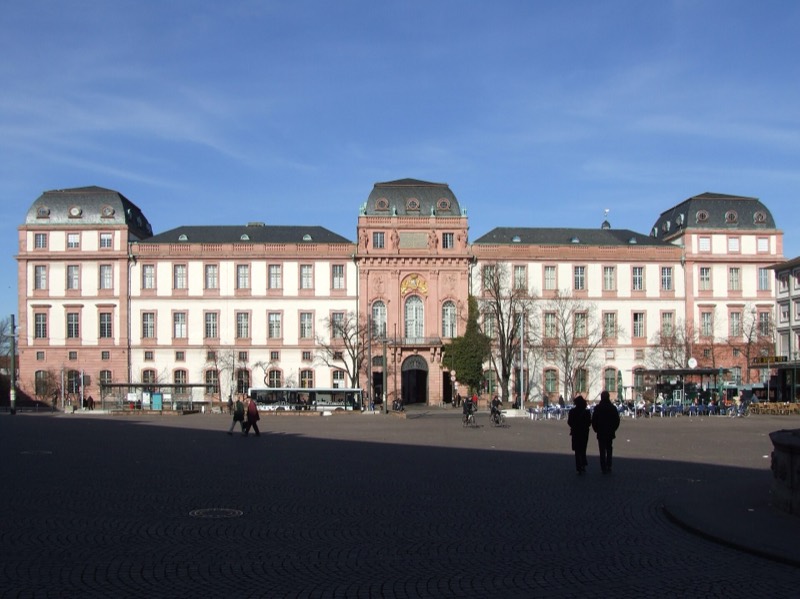
Things to Do in Darmstadt: the Top 10 Sights and a One-Day Walking Route
The top 10 sights in Darmstadt with opening hours, a one-day walking route starting from the Orangerie, everything that’s free, and money-saving tips with the Darmstadt Card and guided tours.
7 min · Read more
Darmstadt as a student city: young, digital, vegan and LGBTQ+-friendly
Around 39,000 students, free Wi-Fi, more than 140 places with vegan options and a queer centre with its own party series: this is how young Darmstadt feels – with a state theatre, parks and puppet theatre for every generation.
7 min · Read more